What Xiao Yao San is used for
In traditional terms, Xiao Yao San addresses liver qi constraint with blood deficiency and a weakened spleen[2] — a pattern whose everyday face is familiar: tension and irritability, mood swings that worsen with stress, premenstrual breast tenderness and irregular cycles, fatigue, poor appetite, and digestive upset under pressure. Practitioners today most often reach for it in cases involving stress, PMS, and mood — and modern clinical research has focused on exactly these areas. Our benefits page reviews what the studies actually show, graded by the quality of the evidence.
Safety at a glance
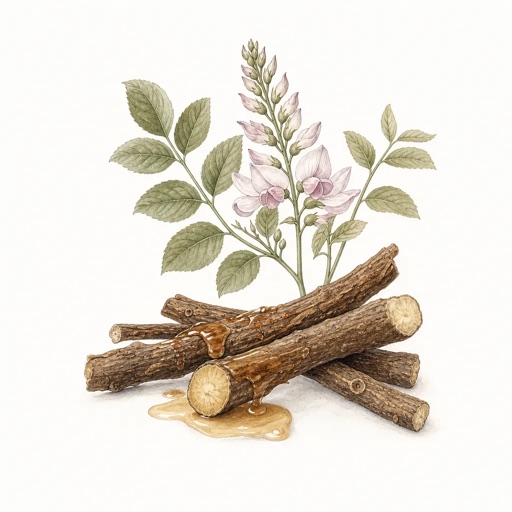
Xiao Yao San has a long history of use and is generally well tolerated, but "herbal" does not mean "risk-free": licorice root interacts with several medications, and anyone pregnant, nursing, or taking prescription drugs should talk to a clinician first. The safety page covers side effects, interactions, and quality concerns in detail.
One formula, several forms
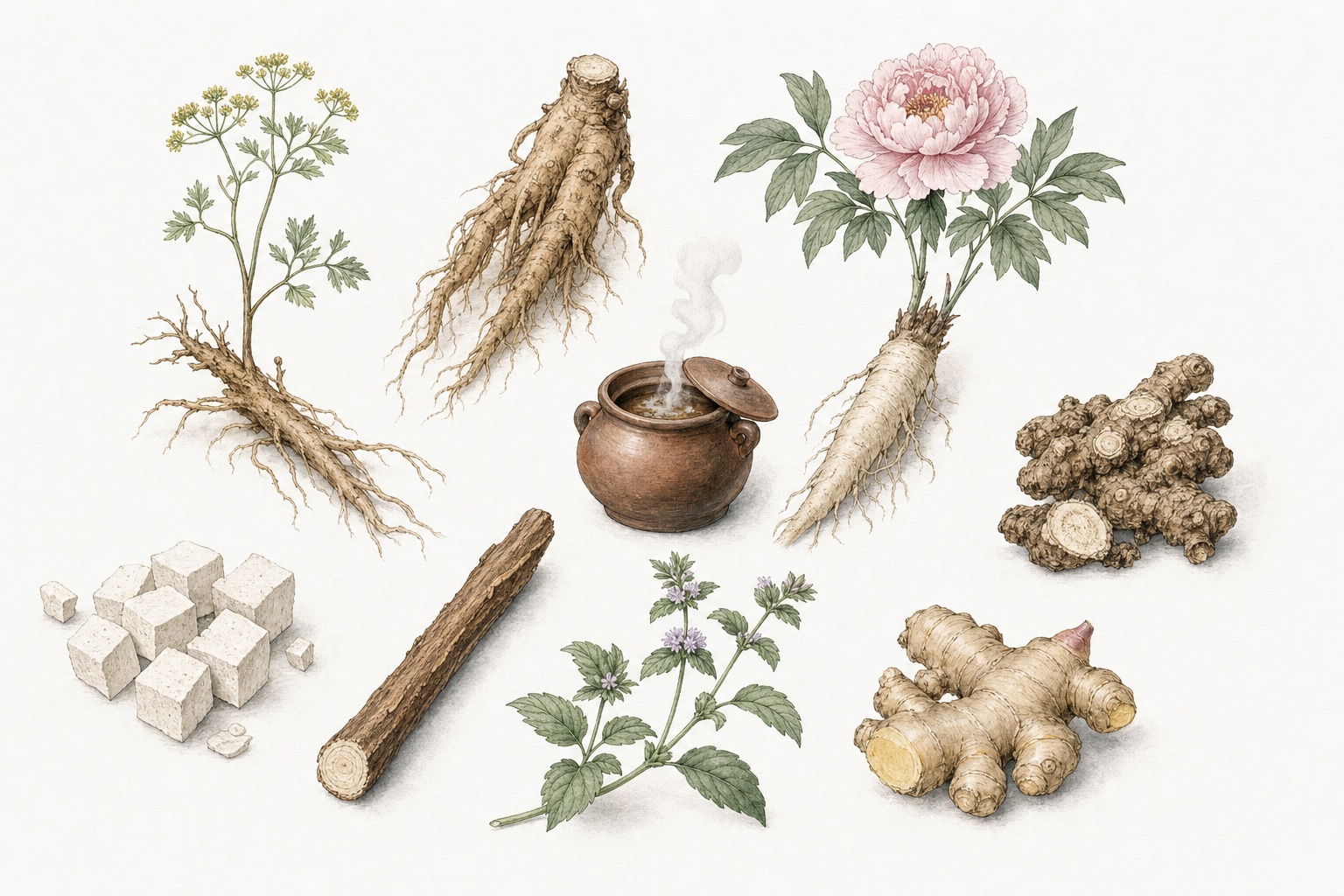
The classical preparation is a powder (san 散) drawn as a draft, but today you will most often meet it as Xiao Yao Wan — teapills — or as concentrated granules. Two added herbs turn the base formula into Jia Wei Xiao Yao San, the "augmented" version used when the same pattern runs hotter. See how to take it for forms and typical dosing.
The name
Xiāo yáo — free, unfettered wandering — is borrowed from the opening chapter of the Daoist classic Zhuangzi. The formula's promise is in its name: to restore the ease of someone strolling without a destination. The history page traces the formula from the Song imperial pharmacy to the modern dispensary[1].